


How RGB, CCT and Fire-Rated Lighting Can Transform a Modern UK Home
A luminous bathroom can lose its composure along one untidy joint. In a beautifully fitted kitchen, a vulnerable seam can admit water to the cabinetry beneath. Silicone supplies the finishing line: modest in appearance, exacting in purpose.
When choosing clear vs white silicone sealant, start with two separate questions: what should the joint look like, and what must it withstand? Colour answers the first. Formulation, compatibility and workmanship answer the second.
Often suits glass and contrasting materials.
Usually complements white sanitaryware and pale tiles.
Clear or White Silicone: The Quick Comparison
Aesthetic guidance only. Confirm the product’s suitability for both surfaces.
Showing 6 of 6 applications
| Application | Suggested finish | Why it works visually |
|---|---|---|
| White bath against white tiles | White | Creates a continuous, crisp borderView white product |
| Glass shower screen | Clear | Keeps the junction visually discreetView clear product |
| White shower tray | White | Echoes the tray’s clean outlineView white product |
| Stainless steel sink against a dark worktop | Clear | Avoids a conspicuous white frameView clear product |
| Contrasting tiles and sanitaryware | Clear | Lets surrounding colours remain visibleView clear product |
| Natural stone worktop | Either Only if stone-approved | Compatibility takes priority over colourCheck stone compatibility |
No applications match. Reset the filters to compare every finish.
Performance follows formulation. Colour alone does not establish waterproofing or mould resistance.
Swipe across on smaller screens. Stone suitability always needs separate approval.
How Each Finish Changes the Room
Clear Silicone: A Quieter Visual Presence
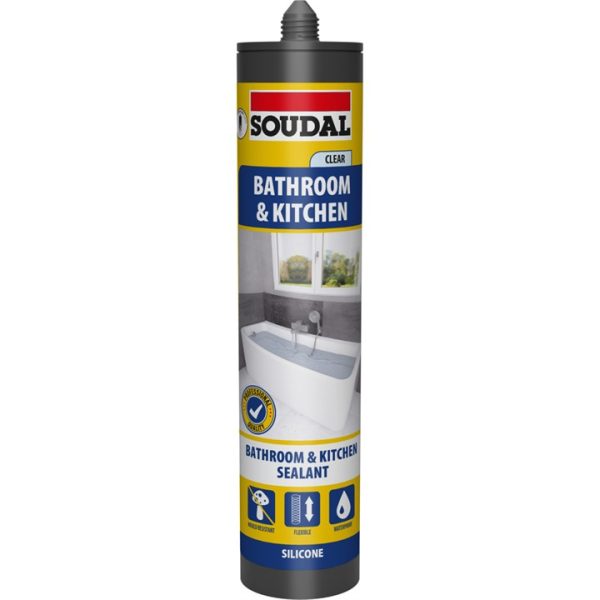
Clear silicone sealant allows the adjoining materials to remain the centre of attention. Around glass, patterned tiles or a dark splashback, it can soften the transition without introducing another colour.
However, clear does not mean invisible. Products described as translucent may have a slight haze, and a thicker bead catches more light. Test a small cured sample if the finish is particularly important.
Transparency also reveals what lies beneath. Old residue, uneven gaps and discoloured edges can remain visible through the bead. Clear silicone rewards meticulous preparation; it cannot disguise a poorly finished junction.
White Silicone: Definition and Continuity
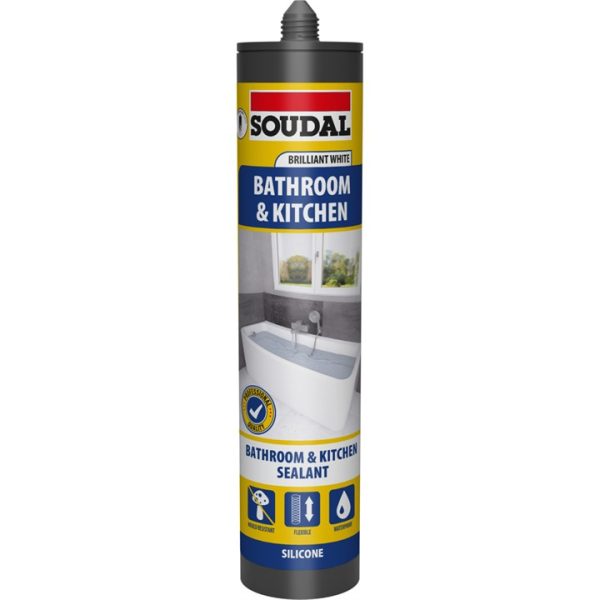
White silicone sealant provides an opaque border that works particularly well with white baths, basins and shower trays. Its appeal is architectural: a clean line that gives the installation a deliberate, finished appearance.
It can conceal minor variations in the colour of sound edges, but should never be used to hide dampness, mould or damaged material. A broad white bead against dark tiles can also dominate the room.
Check the shade before committing. Brilliant white and softer whites may look noticeably different beside existing grout or sanitaryware.
The Technical Details That Matter More Than Colour
Choose Sanitary Silicone for Wet Areas
For bathroom and shower sealant, choose a sanitary formulation that combines flexibility, moisture resistance and mould inhibition. Decorative filler is not interchangeable.
BS EN 15651-3 addresses sealants for sanitary joints exposed to non-pressurised water, including domestic kitchens and showers. A relevant declaration of performance helps identify the intended application; it does not approve every substrate or installation detail. Food-contact applications fall outside this standard’s scope. [1]
Understand Acetoxy and Neutral Cure
Acetoxy silicone releases acetic acid during curing, producing the familiar vinegar-like smell. Suitable formulations bond well to materials such as glass and glazed ceramics, but some exclude particular metals or porous surfaces.
Neutral-cure silicone may suit sensitive materials, but it is not universal approval. For marble, limestone or granite, choose a specifically approved, non-staining natural stone silicone; some neutral sanitary products expressly exclude stone. [2], [3], [4]
For acrylic baths, coated metals and composite worktops, check the exact manufacturer’s compatibility guidance. The material name alone may not reveal its surface coating or treatment.
Allow the Joint to Move
Baths, trays and adjoining surfaces experience small movements under loading and temperature changes. Silicone must accommodate these movements while maintaining adhesion.
A movement rating of ±20% relates to the joint’s original width under specified conditions. It differs from the much larger “elongation at break” figure sometimes advertised.
Suitable backing material controls depth and prevents three-sided adhesion where specified. Follow the product’s joint dimensions; a thicker bead is not necessarily stronger. [2]
Choosing Sealant for Each Room
Kitchens: Respect the Worktop
For kitchen silicone sealant, white is an elegant match for white sinks and pale splashbacks. Clear often looks more restrained around stainless steel or contrasting finishes.
The deciding technical question is compatibility with the sink, worktop and splashback. Where direct food contact is intended, obtain specific approval for that use. A “kitchen and bathroom” label does not itself establish food-contact suitability. [1]
Bathrooms: Follow the Sanitaryware
White is a dependable aesthetic choice around white basins and baths. Clear can preserve the character of coloured tiles or decorative surfaces.
Check that the bath is securely supported. If its manufacturer requires loading during sealing, follow its filling and curing instructions. Silicone cannot correct an unstable installation. [5]
Showers: Follow the Enclosure Instructions
Clear silicone for shower screens often provides the least obtrusive finish; white can frame a pale tray beautifully.
Seal only the locations specified by the enclosure manufacturer. For example, Mira’s guidance specifies external sealing at particular enclosure joints. Follow the model’s sealing diagram; do not assume that every visible gap needs sealing. [6]
Applying Silicone for a Durable Finish
A graceful bead begins with disciplined preparation:
- Remove the existing sealant. Consider an Amtech Caulking Tool Kit; remove residue without scratching the surfaces.
- Prepare the joint. Clean and dry thoroughly. If masking, test KleenEdge low-tack tape on an inconspicuous area first.
- Check dimensions. Follow the specified bead width, depth and backing requirements.
- Apply consistently. Use a suitable Amtech heavy-duty caulking gun, checking cartridge fit. Maintain steady pressure without gaps or trapped air.
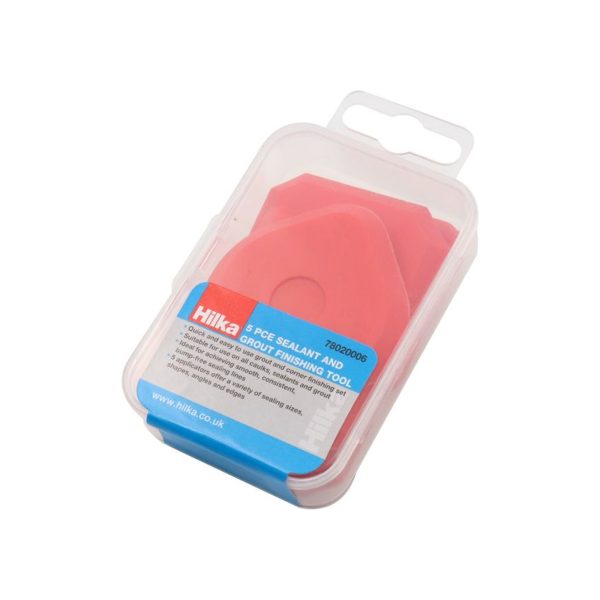
- Tool promptly. Form a smooth profile before skinning, keeping finishing solution away from the bonding faces. Remove masking tape before the bead skins.
- Allow the specified curing period. Protect the joint from water until the manufacturer permits exposure. [7], [4]
Skin formation is not full cure. Soudal Stay Fresh lists approximately ten minutes for skin formation, but approximately 2 mm per 24 hours for curing. Conditions affect these figures. Follow the product’s water-exposure instructions. [4]
Keeping the Finish Beautiful
Mould-resistant silicone still needs care. Soap deposits and persistent contamination can support fungal growth, so clean the joint regularly with compatible products and reduce lingering moisture through ventilation. Neither clear nor white should be treated as maintenance-free. [3]
Inspect for lifting edges, splits and recurring damp patches. If a joint repeatedly fails, investigate movement, trapped moisture or an underlying leak before resealing. A fresh ribbon of silicone should complete a sound installation, not conceal its distress. [7]
Prepare for your project: browse sealants and silicone tools at Electrical Xpress.
Frequently Asked Questions
Is clear or white silicone better for showers?
Both can work when the product is approved for shower use and the adjoining materials. Choose clear for a discreet glass junction and white to complement a white tray.
Is white silicone more waterproof than clear?
No. Colour alone does not establish waterproof performance. Compare the product specification, substrate compatibility and application requirements.
Does clear silicone go mouldy?
It can. Sanitary formulations may resist mould, but accumulated deposits still require cleaning. Transparency does not prevent growth or remove the need for ventilation.
Can I put white silicone over old clear silicone?
For a reliable replacement, remove the old sealant and residue, then prepare clean, dry surfaces. Covering a failing bead leaves its underlying weaknesses unresolved. [7]